Showing posts with label loot. Show all posts

Friday, August 12, 2016

The Post Game - Dragon Age: Inquisition

Dragon Age: Inquisition is possessed of a large, beautiful world, some great characters, action-oriented combat and some required grinding for loot. Tactics are there, but are rarely needed. Experiencing the real ending to the game requires the purchase of the Trespasser DLC. A good game whose world is almost too large for its purpose.
Total installed size on my hard-drive (GOTY edition with all DLC): 39.2 GB.

The story, in the best BioWare tradition, is strong and enticing. Fade-rifts are opening all over Thedas.  Some creature known as Corypheus (if you played Dragon Age II, you might remember who he is) seeks to corrupt / gain the power of the land's ruling factions, gathering earthly power unto
himself as he attempts to elevate himself to god-hood. Is he a demon? A magister? Or some new kind of darkspawn? One of his Fade-rites goes badly wrong, and the player-character gets spit out of a rift with some kind magical mark on their left hand. The Chantry's Divine was killed by the rite (or is she merely trapped in the Fade?), leaving confusion and angry factions pointing fingers at each other. In the midst of this, Seeker Cassandra Pentaghast (also from Dragon Age 2) initiates the Inquisition to close the breach in the sky left by Corypheus's rite and seek those who assisted him.

This all happens in the first hour or so of gameplay. BioWare created a fantastic setting of investigation, exploration, and expansion as the Inquisition becomes yours, to be built and used as you see fit. Large-scale faction missions are plotted from the War Room. Completing missions and closing rifts grants Power Points, which can then be spent in the War Room to unlock new areas or undertake main story missions. It's a cool strategy element that kept me thinking about the bigger implications of the search for Corypheus, and the efforts to gain new allies. While this is happening, the Inquisitor builds his / her squad (up to 9 companions are possible), and can spend a large amount
of time talking to them, helping them, and, yes, romancing them (some restrictions apply!). Some characters return from previous games. Varric and Cassandra are selectable squad-mates (both from Dragon Age II). Hawke is not a member of the party, but does join the Inquisitor for a mission. Leliana (from Origins) is an advisor, and has a large supporting role to play; Morrigan appears about half-way through, and like Hawke joins for a mission. There are also call-backs to the previous games in other ways (with the right choices, the ruler of Ferelden will cameo!). It's all the good stuff we've come to expect from BioWare, and they deliver in spades.

“But what about the combat?” you question. “And the grindy looting you referred to?” Read on.


Much of Inquisition is spent exploring areas that are unlocked via the War Room in search of Power Points. While not a sandbox like Skyrim, there are some really large places to go. All are fully explorable; no linear paths in any of them. There are deserts, lush forests, ice plains, and snowy mountains. The missions that fill these areas vary from helping a widow recover her wedding ring to seizing fortresses from Corypheus' Venatori. Inquisition's area design really inspires that “I wonder what's over here” mentality; a lot of time is spent messing about in the game-world, collecting shards, fighting creatures and helping NPCs. And while out exploring, be sure to stop and loot any items you see to acquire “resources” - ore, gems, plants. You'll need them to craft upgrades. Be sure to loot any chests you see as well, because you can't craft something if you don't have the schematic for it. There's so much stuff to loot that it runs the risk of taking over the game. I appreciated the additional gameplay element, but after a while I just wanted to move on with the story. But that's impossible if not enough Power Points have been accumulated to unlock the next major mission. Finding ALL the loot and completing ALL the missions in an area is not necessary to progress through the game, but a decent amount of grind is required. If exploring is your thing, you probably will have plenty of Power Points when you decide to move on to the next mission. If moving quickly through the story is your method, you'll come to resent the required trips into the countryside to do side missions and accumulate Power Points.

Dragon Age Inquisition's combat is a refined version of Dragon Age II's: slick, swift, and action-focused, with little need to pause the game. I liked the combat of Dragon Age II much better than Origins, so to see it developed further was something I appreciated, but if you were a fan of the older system expect to be disappointed. Party AI is quite decent this time around (for mages, anyway; for rogues, not so much). The Tactics menu itself has taken a severe hit, being smaller and with fewer options. If micro-managing the combat was never your thing, prepare to love the combat of Dragon Age: Inquisition. If you were longing for a return to the depth and detail of Origins, prepare to dislike Inquisition's combat – a lot.

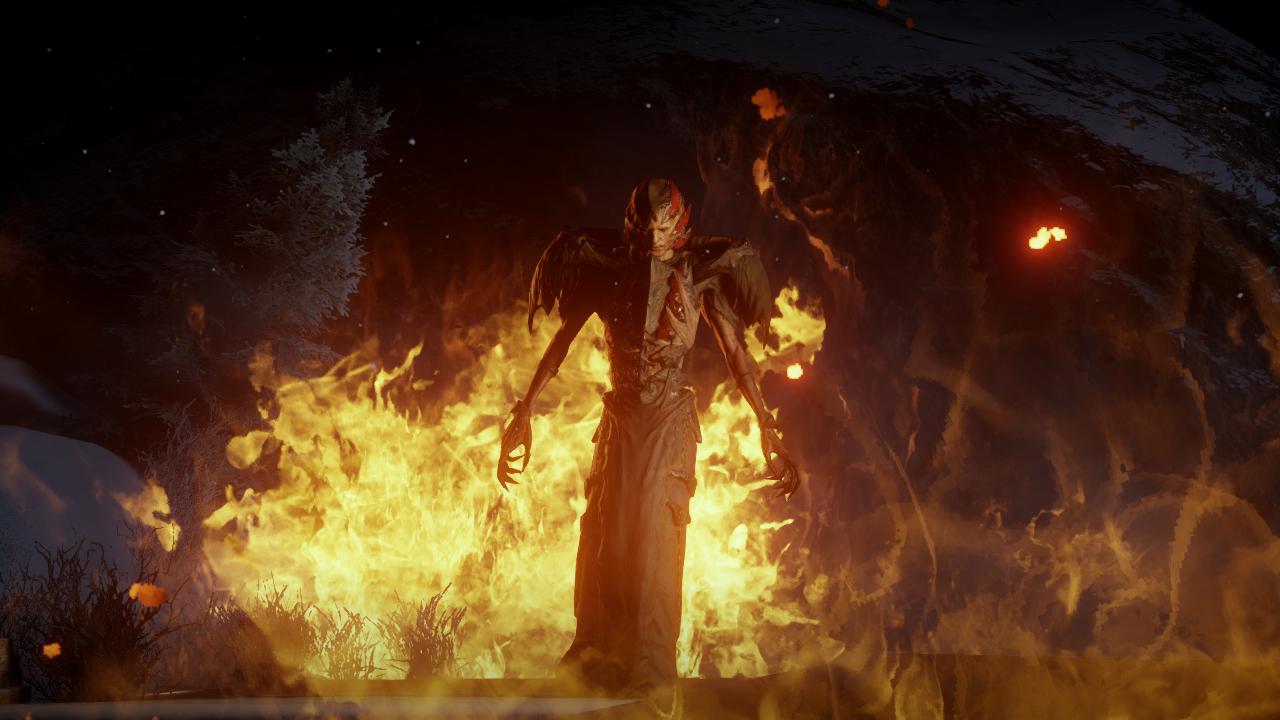
On top of this, the final boss of the main campaign (sans DLC) just isn't that impressive. I was expecting the Inquisition's castle to be assaulted, and to fight hordes of demons (and perhaps also darkspawn) in the corridors, fighting up to the highest tower or lowest dungeon, to be greeted with the final boss. This does not happen. There's some teleportation involved, some cool magically shifting landscape, a three-stage battle, and – that's it. It's strangely anti-climatic. It's only after seeing the post-credits scene that we realize who the REAL threat is – but you'll need the Trespasser DLC to deal with them. After all that time spent gathering resources and steeling myself for the implications of the final boss, it is a deliberate fake-out by BioWare. The final boss is over so quickly, and the post-credits reveal occurs so suddenly that if you didn't purchase at least Trespasser, be ready to yell in rage at the obvious DLC-bait.

So Dragon Age: Inquisition is a mixed bag. I love long, grindy games if they're set in a gorgeous world with plenty of things to do. Inquisition delivers by the truck-load. The story is enjoyable, the characters a pleasure. The combat is an evolution of Dragon Age 2's, the final boss is disappointing, and you have to DLC the real ending. Get the Game of the Year Edition, it's the best bargain. Good, but burdened by grinding; 7 out of 10.

Sunday, June 12, 2016

The Post-Game - Kingdoms of Amalur: Reckoning

A lot of users compare this game to Skyrim, when really it is more like a single-player mix of Torchlight II and Guild Wars 2. Tons of missions, deep crafting, combo-friendly combat, a huge game-world and genuinely interesting lore means a lot of time can be spent in Amalur.
Installed size on hard drive (with all DLC): 11.6 GB

Reckoning is rather like a single-player MMO, if that makes any sense. Looting, crafting and leveling are the primary attractions. There is a ton of loot; putting points into the “detect hidden” skill reveals secret rooms and passageways that have even more loot. You'll want to loot as much as you can, even armor sets that you won't use – put points into blacksmithing, disassemble the armor and weapons you don't want to get the parts, and craft something truly epic. Leveling up provides new abilities, new special moves for weapons. At the end of each leveling session, you get to choose a “Fate Card” with special bonuses. Fate Cards are not class-specific, meaning you can use them to create a warrior mage who equips heavy armor, or an archer can wield heavy weapons, or a thief / rogue who also has some magic. There are dozens of hybrid “Fate Cards.” And if you're not happy with how your build has turned out, visit a Fateweaver to “Remix your Fate” and reset your build so you can level up again with your existing points.

The world is huge. There are a lot of places to explore with side-missions hidden everywhere. The graphics are 2012 era DirectX 9: Colorful, bright, and occasionally low-res. The general comic-book style of the artwork hides some graphical shortcomings. And on the plus side, if you have a less-than-stellar gaming PC, the game will probably run just fine. (Back in the day, I ran it on a 1GB Radeon 6670 without issues). The soundtrack by Grant Kirkhope catches the ambiance nicely. The voice acting is generally good (though your hero is silent, like in Dragon Age Origins).

Not everything is excellent, unfortunately. Combat flows well, encouraging the use of different moves. Despite the many different skills and abilities at my disposal, once I found a way to dispose of mobs, I just stuck to that, and never really tried to change up my attacks. I won't say combat is easy – if you go into an area under-leveled, you'll die fast (even with potions). But once you're comfortable in the system, combat becomes just another chore. Fetch quests are repetitive. All exploration is done on foot – no horses. The dungeons are NOT copy / pasted; there's a lot of variety here. But the missions that use the dungeon and cave levels tend to follow similar patterns. If you try to do a completionist run of Reckoning, you'll need a titanic level of patience and dedication. Inventory management, frankly, s*cks. Oh, and jumping. You can't jump, except at prescribed places (“press F to jump”).

Kingdoms of Amalur: Reckoning is a great game if you love messing about in an open world while worrying about plot later. If you're looking for a go-anywhere, do-anything adventure (with the freedom to jump wherever you want), you'll probably be happier with Skyrim. Or online with friends in Guild Wars 2. Sometimes, though, a solitary, easy grind for loot is exactly what you want - and exactly what Reckoning provides.

On DLC:
The Weapons and Armor DLC provides three complete weapons sets that are accessible at the start of the game. While great to have, the things you craft will quickly surpass them in quality and effectiveness.

The Teeth of Naros and The Legend of Dead Kel are both large additions to an already massive game. Each provides a new campaign and entirely new areas to explore. Naros in particular is a great piece of DLC. Both have a lot of content in an industry where content-laden DLC are rare. Definitely worth it to get both.

Notes:
An EA account is NOT required. Though the game asks for an EA login on startup, you can simply click the X in the corner to skip the login. The game will play and save normally.

The company that developed Reckoning, 38 Studios, went bankrupt in 2013. The only support for the game is what you will find when trawling the forums.

Thursday, January 7, 2016

The Post-Game: Borderlands

Borderlands leaves me with mixed feelings. I had a great time playing it – when I wasn't bored by endless fetch-quests, easy combat and (in the DLC) re-used bosses.

I enjoyed the weapons the most. They feel and fire great, with a lot of variety. There's a finite amount of cash, so most of your weapons will be found via looting. And there is a TON of stuff to loot. Any fallen enemy drops loot, from bandits to wild animals. And if you find a stash, well, you just might land yourself a rare. Sniper rifles have a fixed zoom, though.

The game world is huge and drab; a real wasteland. The visual style is still unique (even with Telltale using a similar hand-drawn, cell-shaded look for most of their games). It was a little jarring at first, but after a few hours I found the graphics very appealing. And light on system resources. I am able to run Borderlands at max settings @1440p on an R7 260X! Borderlands is just not that demanding.

Getting around the huge world isn't a problem; Scooter's vehicle terminals are everywhere, making it very easy to “Git you one!” But why are we traversing the gameworld? Fetch-quests, mostly. “Bring me 20 fish!” “Destroy 3 fuel tanks!” “Find 20 parts!” They're not all fetch-quests, of course, but there's quite a bit of padding. The attraction was supposed to lie in the combat (and looting) while completing the quests. Which is fine, except the combat is easy. If you do a few side-quests and suddenly find yourself 2 or more levels higher than recommended, you'll breeze through the missions. Co-op play is supposed to mean harder enemies and better loot; I found co-op even easier.

I'd heard so much about how good the characters of Borderlands are, and they're there, but barely; the characters are the start- and end-points of the missions, but that's it. You'll barely even see a cut-scene with them (except in some of the DLC). Claptraps are everywhere, and they're obviously designed to be cute. What about the story? Well, you're looking for a vault; think of it as a box. You're on a planet named “Pandora”. Put the two together, and hopefully you won't be too disappointed when you finally get to the vault after an endless level of “guardians”.

So, I have mixed feelings about Borderlands. I found it tremendously fun in co-op, though, so if you have a few friends who want to run around together shooting and looting, grab it by all means. If you're planning to solo most of it, it will be a solitary, easy grind for loot. Not a bad thing if that's what you're looking for; if you were hoping for more, though, you'll be disappointed.

"Wait, you forgot about your reference to 'recycled bosses'!"

Read on.

On DLC:
There are four DLC, all of them substantial additions to the main game; campaigns are large (as are the rewards) and well worth the purchase – especially if you're buying the game for its co-op.

Some problems with the DLC, though:
- No fast travel. Wait, wtf? That's right. You fast travel to the start of the DLC campaign, but within the DLC, there is no fast-travel, meaning you'll spend a lot of time running (or driving). If you pass a save-point deep within a level, and quit your game, the next time you load your save, you'll be back at the beginning of the DLC, and have to run / drive all the way back to where you were when you saved.
- RECYCLED BOSSES. You'll re-fight the boss from the main campaign, and in the Claptrap Robot Revolution DLC, you'll also re-fight the bosses from The Zombie Island of Dr. Ned and The Secret Armory of General Knoxx – sometimes even multiple times! Borderlands tries to be self-deprecating as it does this, but it doesn't change the fact that they're re-using assets. It reeks of being cheap. Did the devs seriously think we would swallow the EXACT same boss three times without complaining? Come on.