Showing posts with label role playing. Show all posts

Sunday, October 2, 2016

The Post Game - Borderlands 2

Borderlands 2 takes what the first game offered, and adds more, larger areas to explore, more characters, a fantastic story, new enemies, new ways to play, a great soundtrack and stylized graphics that are just as unique as before, but now look even better. And like the first game, it is playable as a four-player co-operative game with easy drop-in / drop-out. If you're an fps fan you owe it to yourself to get this game. I realize that sounds a bit fanboyish, but really, Borderlands 2 is THAT good.
Installed size on my hard-drive (GOTY edition): 10.4 GB.

The number of areas to explore is huge. I don't have the exact data, but it feels several times larger than the first game. There is a lot of snow at the start, but there are rocky deserts, alpine meadows, and a slag-riddled environmental monstrosity awaiting at the end. Quick-travel points abound (usually at the entrances to areas), so it's easy to go from one place to another. In-game save points are unfortunately like the first game; even if you passed a quick-save point, then quit the game thinking you'll resume where you left off, well, you won't. When you resume, you'll be back at the start of the level. Levels are well designed, too – twisting and turning at times, while others are wide open.

The characters that we played in the first game (Roland, Lilith, Mordecai and Brick) are NPCs here, with the story centered around them. Angel, Claptrap, Moxxi, Scooter, Dr. Zed and Marcus return as well. So right away, stepping out into the wastes of Pandora has a familiar vibe. Except now the enemy is the boss of Hyperion Corp, Handsome Jack. Colorful and distinct, there are enough personalities here to never lose interest – even when doing several of the fetch-quest filler missions (yes, they're back, but given the looting-and-leveling nature of the Borderlands games, probably unavoidable). While the story is great, I can't talk too much about it here without spoiling it. The early stages play out as a defy-the-odds hero tale as the player character defies Handsome Jack and escapes to the town of Sanctuary. Angel is still guiding you on your HUD, but your character catches her in a bit of deception. The second act reveals who (and where) she is – and sets the stage for the third act, which culminates in the showdown with Handsome Jack. I was genuinely curious about how this was going to resolve, and kept playing all the way through. This isn't even touching the side missions and quests for secondary characters. Side quests are a mixed bag. I was more than happy to free some animals for Mordecai; collecting body parts for Dr. Zed while a timer counted down was just annoying, and the rewards were barely worth it in either case (usually XP and a weapon which was far below my current level). The only reason to do a number of the side missions is because of the possibility of rare loot and character backstory. The rest are grindy level-fodder, needed for leveling up, but nothing else.

I solo'd most of Borderlands 2 – yeah, crazy – and the game worked well as a solo experience. The bosses were never too hard; just long. One boss took me 45 minutes of running, hiding, sniping, and running again (I was playing the commando class). Clearly the bosses were not designed for soloing. The loot drops were also disappointing. The guns for sale at the kiosks were always – and I mean always – worse than what I was carrying. It's better to loot new weapons than buy them. Which means that other than ammo, there's nothing to spend money on (except respawning). The best weapons are acquired by using a “golden key” on the special loot-drop chest in Sanctuary, so sometimes it's just easier to spend a golden key than spending hours poring over loot (some side-missions for Moxxi do provide decent weapons).

If there is a drawback to Borderlands 2, it’s the amount of DLC. There is a lot. Tiny Tina’s Assault on Dragon Keep was one of the best pieces of DLC I’ve ever encountered, having a fun story that was uniquely told. The Captain Scarlett DLC, the Creature Slaughterdome DLC and Torgue’s Campaign of Carnage DLC provide solid additional content. But additional player classes as DLC? (The Psycho and Mechromancer DLCs) Raising the character level cap via DLC? (Ultimate Vault Hunter Upgrade packs) There are a number of DLC packs that focus on skins and such, but this level of “parting out” the game verges on the ridiculous. If the game were not complete without the DLC, it’d be time for a rant. However, without the DLC, Borderlands 2 still feels like a complete experience. Thus I lament the DLC situation, but deduct no points for it.


In an age when it’s cool to have “the latest” at expense of forgetting the hit games of yesteryear, Borderlands 2 inspires the sort of interest that kept me coming back again and again. A great achievement in fps video games, and a game that belongs in the library of every fan of the genre.

Friday, August 12, 2016

The Post Game - Dragon Age: Inquisition

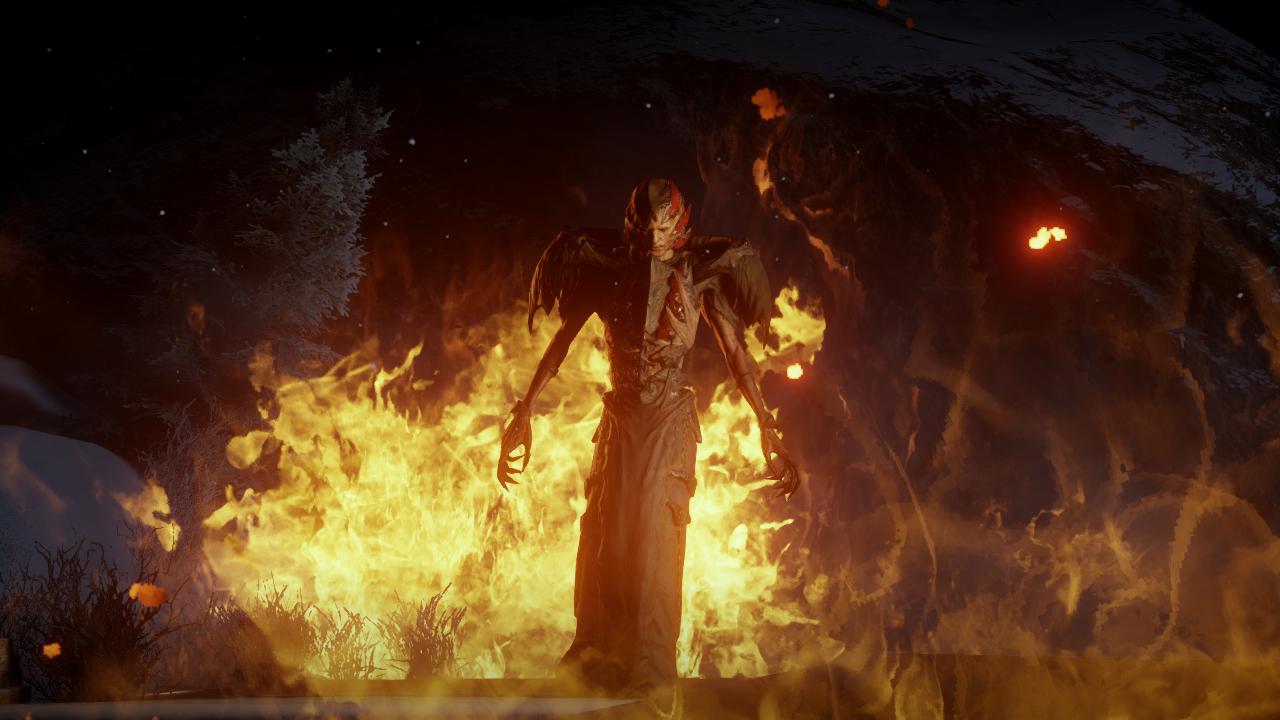
Dragon Age: Inquisition is possessed of a large, beautiful world, some great characters, action-oriented combat and some required grinding for loot. Tactics are there, but are rarely needed. Experiencing the real ending to the game requires the purchase of the Trespasser DLC. A good game whose world is almost too large for its purpose.
Total installed size on my hard-drive (GOTY edition with all DLC): 39.2 GB.

The story, in the best BioWare tradition, is strong and enticing. Fade-rifts are opening all over Thedas.  Some creature known as Corypheus (if you played Dragon Age II, you might remember who he is) seeks to corrupt / gain the power of the land's ruling factions, gathering earthly power unto
himself as he attempts to elevate himself to god-hood. Is he a demon? A magister? Or some new kind of darkspawn? One of his Fade-rites goes badly wrong, and the player-character gets spit out of a rift with some kind magical mark on their left hand. The Chantry's Divine was killed by the rite (or is she merely trapped in the Fade?), leaving confusion and angry factions pointing fingers at each other. In the midst of this, Seeker Cassandra Pentaghast (also from Dragon Age 2) initiates the Inquisition to close the breach in the sky left by Corypheus's rite and seek those who assisted him.

This all happens in the first hour or so of gameplay. BioWare created a fantastic setting of investigation, exploration, and expansion as the Inquisition becomes yours, to be built and used as you see fit. Large-scale faction missions are plotted from the War Room. Completing missions and closing rifts grants Power Points, which can then be spent in the War Room to unlock new areas or undertake main story missions. It's a cool strategy element that kept me thinking about the bigger implications of the search for Corypheus, and the efforts to gain new allies. While this is happening, the Inquisitor builds his / her squad (up to 9 companions are possible), and can spend a large amount
of time talking to them, helping them, and, yes, romancing them (some restrictions apply!). Some characters return from previous games. Varric and Cassandra are selectable squad-mates (both from Dragon Age II). Hawke is not a member of the party, but does join the Inquisitor for a mission. Leliana (from Origins) is an advisor, and has a large supporting role to play; Morrigan appears about half-way through, and like Hawke joins for a mission. There are also call-backs to the previous games in other ways (with the right choices, the ruler of Ferelden will cameo!). It's all the good stuff we've come to expect from BioWare, and they deliver in spades.

“But what about the combat?” you question. “And the grindy looting you referred to?” Read on.


Much of Inquisition is spent exploring areas that are unlocked via the War Room in search of Power Points. While not a sandbox like Skyrim, there are some really large places to go. All are fully explorable; no linear paths in any of them. There are deserts, lush forests, ice plains, and snowy mountains. The missions that fill these areas vary from helping a widow recover her wedding ring to seizing fortresses from Corypheus' Venatori. Inquisition's area design really inspires that “I wonder what's over here” mentality; a lot of time is spent messing about in the game-world, collecting shards, fighting creatures and helping NPCs. And while out exploring, be sure to stop and loot any items you see to acquire “resources” - ore, gems, plants. You'll need them to craft upgrades. Be sure to loot any chests you see as well, because you can't craft something if you don't have the schematic for it. There's so much stuff to loot that it runs the risk of taking over the game. I appreciated the additional gameplay element, but after a while I just wanted to move on with the story. But that's impossible if not enough Power Points have been accumulated to unlock the next major mission. Finding ALL the loot and completing ALL the missions in an area is not necessary to progress through the game, but a decent amount of grind is required. If exploring is your thing, you probably will have plenty of Power Points when you decide to move on to the next mission. If moving quickly through the story is your method, you'll come to resent the required trips into the countryside to do side missions and accumulate Power Points.

Dragon Age Inquisition's combat is a refined version of Dragon Age II's: slick, swift, and action-focused, with little need to pause the game. I liked the combat of Dragon Age II much better than Origins, so to see it developed further was something I appreciated, but if you were a fan of the older system expect to be disappointed. Party AI is quite decent this time around (for mages, anyway; for rogues, not so much). The Tactics menu itself has taken a severe hit, being smaller and with fewer options. If micro-managing the combat was never your thing, prepare to love the combat of Dragon Age: Inquisition. If you were longing for a return to the depth and detail of Origins, prepare to dislike Inquisition's combat – a lot.

On top of this, the final boss of the main campaign (sans DLC) just isn't that impressive. I was expecting the Inquisition's castle to be assaulted, and to fight hordes of demons (and perhaps also darkspawn) in the corridors, fighting up to the highest tower or lowest dungeon, to be greeted with the final boss. This does not happen. There's some teleportation involved, some cool magically shifting landscape, a three-stage battle, and – that's it. It's strangely anti-climatic. It's only after seeing the post-credits scene that we realize who the REAL threat is – but you'll need the Trespasser DLC to deal with them. After all that time spent gathering resources and steeling myself for the implications of the final boss, it is a deliberate fake-out by BioWare. The final boss is over so quickly, and the post-credits reveal occurs so suddenly that if you didn't purchase at least Trespasser, be ready to yell in rage at the obvious DLC-bait.

So Dragon Age: Inquisition is a mixed bag. I love long, grindy games if they're set in a gorgeous world with plenty of things to do. Inquisition delivers by the truck-load. The story is enjoyable, the characters a pleasure. The combat is an evolution of Dragon Age 2's, the final boss is disappointing, and you have to DLC the real ending. Get the Game of the Year Edition, it's the best bargain. Good, but burdened by grinding; 7 out of 10.

Sunday, June 12, 2016

The Post-Game - Kingdoms of Amalur: Reckoning

A lot of users compare this game to Skyrim, when really it is more like a single-player mix of Torchlight II and Guild Wars 2. Tons of missions, deep crafting, combo-friendly combat, a huge game-world and genuinely interesting lore means a lot of time can be spent in Amalur.
Installed size on hard drive (with all DLC): 11.6 GB

Reckoning is rather like a single-player MMO, if that makes any sense. Looting, crafting and leveling are the primary attractions. There is a ton of loot; putting points into the “detect hidden” skill reveals secret rooms and passageways that have even more loot. You'll want to loot as much as you can, even armor sets that you won't use – put points into blacksmithing, disassemble the armor and weapons you don't want to get the parts, and craft something truly epic. Leveling up provides new abilities, new special moves for weapons. At the end of each leveling session, you get to choose a “Fate Card” with special bonuses. Fate Cards are not class-specific, meaning you can use them to create a warrior mage who equips heavy armor, or an archer can wield heavy weapons, or a thief / rogue who also has some magic. There are dozens of hybrid “Fate Cards.” And if you're not happy with how your build has turned out, visit a Fateweaver to “Remix your Fate” and reset your build so you can level up again with your existing points.

The world is huge. There are a lot of places to explore with side-missions hidden everywhere. The graphics are 2012 era DirectX 9: Colorful, bright, and occasionally low-res. The general comic-book style of the artwork hides some graphical shortcomings. And on the plus side, if you have a less-than-stellar gaming PC, the game will probably run just fine. (Back in the day, I ran it on a 1GB Radeon 6670 without issues). The soundtrack by Grant Kirkhope catches the ambiance nicely. The voice acting is generally good (though your hero is silent, like in Dragon Age Origins).

Not everything is excellent, unfortunately. Combat flows well, encouraging the use of different moves. Despite the many different skills and abilities at my disposal, once I found a way to dispose of mobs, I just stuck to that, and never really tried to change up my attacks. I won't say combat is easy – if you go into an area under-leveled, you'll die fast (even with potions). But once you're comfortable in the system, combat becomes just another chore. Fetch quests are repetitive. All exploration is done on foot – no horses. The dungeons are NOT copy / pasted; there's a lot of variety here. But the missions that use the dungeon and cave levels tend to follow similar patterns. If you try to do a completionist run of Reckoning, you'll need a titanic level of patience and dedication. Inventory management, frankly, s*cks. Oh, and jumping. You can't jump, except at prescribed places (“press F to jump”).

Kingdoms of Amalur: Reckoning is a great game if you love messing about in an open world while worrying about plot later. If you're looking for a go-anywhere, do-anything adventure (with the freedom to jump wherever you want), you'll probably be happier with Skyrim. Or online with friends in Guild Wars 2. Sometimes, though, a solitary, easy grind for loot is exactly what you want - and exactly what Reckoning provides.

On DLC:
The Weapons and Armor DLC provides three complete weapons sets that are accessible at the start of the game. While great to have, the things you craft will quickly surpass them in quality and effectiveness.

The Teeth of Naros and The Legend of Dead Kel are both large additions to an already massive game. Each provides a new campaign and entirely new areas to explore. Naros in particular is a great piece of DLC. Both have a lot of content in an industry where content-laden DLC are rare. Definitely worth it to get both.

Notes:
An EA account is NOT required. Though the game asks for an EA login on startup, you can simply click the X in the corner to skip the login. The game will play and save normally.

The company that developed Reckoning, 38 Studios, went bankrupt in 2013. The only support for the game is what you will find when trawling the forums.