Showing posts with label op-ed. Show all posts

Sunday, October 2, 2016

The Post Game - Borderlands 2

Borderlands 2 takes what the first game offered, and adds more, larger areas to explore, more characters, a fantastic story, new enemies, new ways to play, a great soundtrack and stylized graphics that are just as unique as before, but now look even better. And like the first game, it is playable as a four-player co-operative game with easy drop-in / drop-out. If you're an fps fan you owe it to yourself to get this game. I realize that sounds a bit fanboyish, but really, Borderlands 2 is THAT good.
Installed size on my hard-drive (GOTY edition): 10.4 GB.

The number of areas to explore is huge. I don't have the exact data, but it feels several times larger than the first game. There is a lot of snow at the start, but there are rocky deserts, alpine meadows, and a slag-riddled environmental monstrosity awaiting at the end. Quick-travel points abound (usually at the entrances to areas), so it's easy to go from one place to another. In-game save points are unfortunately like the first game; even if you passed a quick-save point, then quit the game thinking you'll resume where you left off, well, you won't. When you resume, you'll be back at the start of the level. Levels are well designed, too – twisting and turning at times, while others are wide open.

The characters that we played in the first game (Roland, Lilith, Mordecai and Brick) are NPCs here, with the story centered around them. Angel, Claptrap, Moxxi, Scooter, Dr. Zed and Marcus return as well. So right away, stepping out into the wastes of Pandora has a familiar vibe. Except now the enemy is the boss of Hyperion Corp, Handsome Jack. Colorful and distinct, there are enough personalities here to never lose interest – even when doing several of the fetch-quest filler missions (yes, they're back, but given the looting-and-leveling nature of the Borderlands games, probably unavoidable). While the story is great, I can't talk too much about it here without spoiling it. The early stages play out as a defy-the-odds hero tale as the player character defies Handsome Jack and escapes to the town of Sanctuary. Angel is still guiding you on your HUD, but your character catches her in a bit of deception. The second act reveals who (and where) she is – and sets the stage for the third act, which culminates in the showdown with Handsome Jack. I was genuinely curious about how this was going to resolve, and kept playing all the way through. This isn't even touching the side missions and quests for secondary characters. Side quests are a mixed bag. I was more than happy to free some animals for Mordecai; collecting body parts for Dr. Zed while a timer counted down was just annoying, and the rewards were barely worth it in either case (usually XP and a weapon which was far below my current level). The only reason to do a number of the side missions is because of the possibility of rare loot and character backstory. The rest are grindy level-fodder, needed for leveling up, but nothing else.

I solo'd most of Borderlands 2 – yeah, crazy – and the game worked well as a solo experience. The bosses were never too hard; just long. One boss took me 45 minutes of running, hiding, sniping, and running again (I was playing the commando class). Clearly the bosses were not designed for soloing. The loot drops were also disappointing. The guns for sale at the kiosks were always – and I mean always – worse than what I was carrying. It's better to loot new weapons than buy them. Which means that other than ammo, there's nothing to spend money on (except respawning). The best weapons are acquired by using a “golden key” on the special loot-drop chest in Sanctuary, so sometimes it's just easier to spend a golden key than spending hours poring over loot (some side-missions for Moxxi do provide decent weapons).

If there is a drawback to Borderlands 2, it’s the amount of DLC. There is a lot. Tiny Tina’s Assault on Dragon Keep was one of the best pieces of DLC I’ve ever encountered, having a fun story that was uniquely told. The Captain Scarlett DLC, the Creature Slaughterdome DLC and Torgue’s Campaign of Carnage DLC provide solid additional content. But additional player classes as DLC? (The Psycho and Mechromancer DLCs) Raising the character level cap via DLC? (Ultimate Vault Hunter Upgrade packs) There are a number of DLC packs that focus on skins and such, but this level of “parting out” the game verges on the ridiculous. If the game were not complete without the DLC, it’d be time for a rant. However, without the DLC, Borderlands 2 still feels like a complete experience. Thus I lament the DLC situation, but deduct no points for it.


In an age when it’s cool to have “the latest” at expense of forgetting the hit games of yesteryear, Borderlands 2 inspires the sort of interest that kept me coming back again and again. A great achievement in fps video games, and a game that belongs in the library of every fan of the genre.

Friday, August 12, 2016

The Post Game - Dragon Age: Inquisition

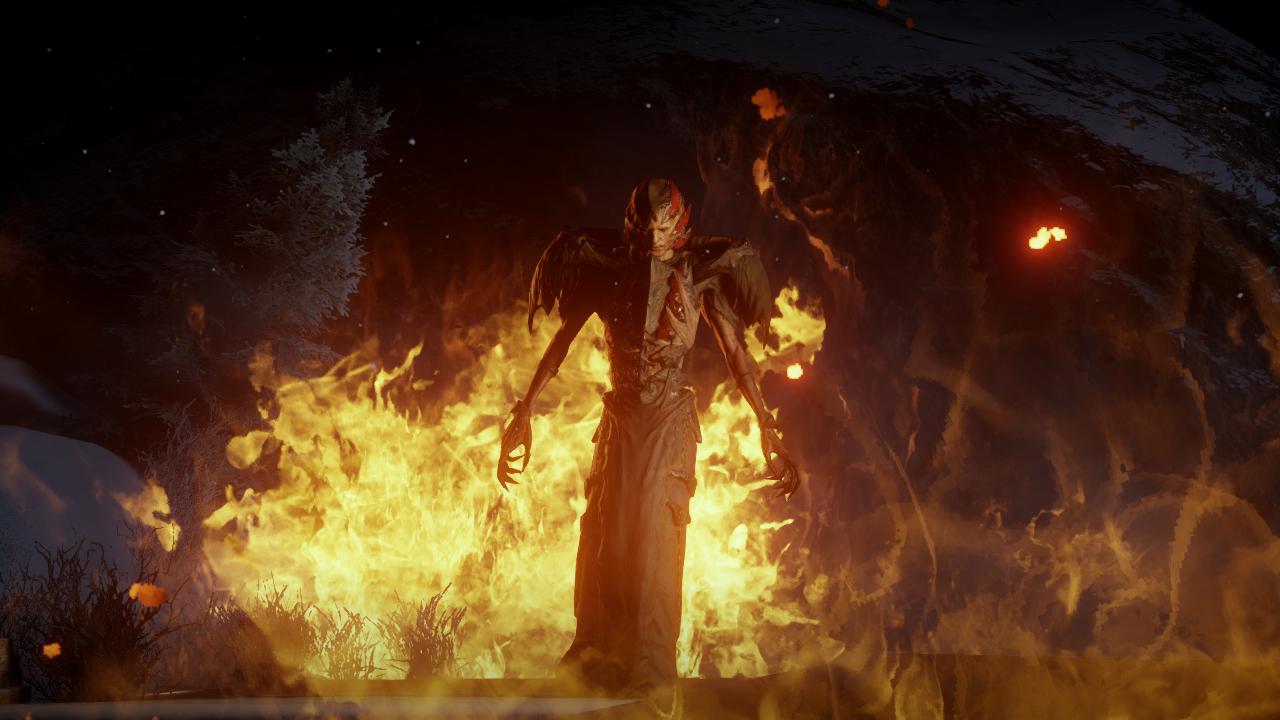
Dragon Age: Inquisition is possessed of a large, beautiful world, some great characters, action-oriented combat and some required grinding for loot. Tactics are there, but are rarely needed. Experiencing the real ending to the game requires the purchase of the Trespasser DLC. A good game whose world is almost too large for its purpose.
Total installed size on my hard-drive (GOTY edition with all DLC): 39.2 GB.

The story, in the best BioWare tradition, is strong and enticing. Fade-rifts are opening all over Thedas.  Some creature known as Corypheus (if you played Dragon Age II, you might remember who he is) seeks to corrupt / gain the power of the land's ruling factions, gathering earthly power unto
himself as he attempts to elevate himself to god-hood. Is he a demon? A magister? Or some new kind of darkspawn? One of his Fade-rites goes badly wrong, and the player-character gets spit out of a rift with some kind magical mark on their left hand. The Chantry's Divine was killed by the rite (or is she merely trapped in the Fade?), leaving confusion and angry factions pointing fingers at each other. In the midst of this, Seeker Cassandra Pentaghast (also from Dragon Age 2) initiates the Inquisition to close the breach in the sky left by Corypheus's rite and seek those who assisted him.

This all happens in the first hour or so of gameplay. BioWare created a fantastic setting of investigation, exploration, and expansion as the Inquisition becomes yours, to be built and used as you see fit. Large-scale faction missions are plotted from the War Room. Completing missions and closing rifts grants Power Points, which can then be spent in the War Room to unlock new areas or undertake main story missions. It's a cool strategy element that kept me thinking about the bigger implications of the search for Corypheus, and the efforts to gain new allies. While this is happening, the Inquisitor builds his / her squad (up to 9 companions are possible), and can spend a large amount
of time talking to them, helping them, and, yes, romancing them (some restrictions apply!). Some characters return from previous games. Varric and Cassandra are selectable squad-mates (both from Dragon Age II). Hawke is not a member of the party, but does join the Inquisitor for a mission. Leliana (from Origins) is an advisor, and has a large supporting role to play; Morrigan appears about half-way through, and like Hawke joins for a mission. There are also call-backs to the previous games in other ways (with the right choices, the ruler of Ferelden will cameo!). It's all the good stuff we've come to expect from BioWare, and they deliver in spades.

“But what about the combat?” you question. “And the grindy looting you referred to?” Read on.


Much of Inquisition is spent exploring areas that are unlocked via the War Room in search of Power Points. While not a sandbox like Skyrim, there are some really large places to go. All are fully explorable; no linear paths in any of them. There are deserts, lush forests, ice plains, and snowy mountains. The missions that fill these areas vary from helping a widow recover her wedding ring to seizing fortresses from Corypheus' Venatori. Inquisition's area design really inspires that “I wonder what's over here” mentality; a lot of time is spent messing about in the game-world, collecting shards, fighting creatures and helping NPCs. And while out exploring, be sure to stop and loot any items you see to acquire “resources” - ore, gems, plants. You'll need them to craft upgrades. Be sure to loot any chests you see as well, because you can't craft something if you don't have the schematic for it. There's so much stuff to loot that it runs the risk of taking over the game. I appreciated the additional gameplay element, but after a while I just wanted to move on with the story. But that's impossible if not enough Power Points have been accumulated to unlock the next major mission. Finding ALL the loot and completing ALL the missions in an area is not necessary to progress through the game, but a decent amount of grind is required. If exploring is your thing, you probably will have plenty of Power Points when you decide to move on to the next mission. If moving quickly through the story is your method, you'll come to resent the required trips into the countryside to do side missions and accumulate Power Points.

Dragon Age Inquisition's combat is a refined version of Dragon Age II's: slick, swift, and action-focused, with little need to pause the game. I liked the combat of Dragon Age II much better than Origins, so to see it developed further was something I appreciated, but if you were a fan of the older system expect to be disappointed. Party AI is quite decent this time around (for mages, anyway; for rogues, not so much). The Tactics menu itself has taken a severe hit, being smaller and with fewer options. If micro-managing the combat was never your thing, prepare to love the combat of Dragon Age: Inquisition. If you were longing for a return to the depth and detail of Origins, prepare to dislike Inquisition's combat – a lot.

On top of this, the final boss of the main campaign (sans DLC) just isn't that impressive. I was expecting the Inquisition's castle to be assaulted, and to fight hordes of demons (and perhaps also darkspawn) in the corridors, fighting up to the highest tower or lowest dungeon, to be greeted with the final boss. This does not happen. There's some teleportation involved, some cool magically shifting landscape, a three-stage battle, and – that's it. It's strangely anti-climatic. It's only after seeing the post-credits scene that we realize who the REAL threat is – but you'll need the Trespasser DLC to deal with them. After all that time spent gathering resources and steeling myself for the implications of the final boss, it is a deliberate fake-out by BioWare. The final boss is over so quickly, and the post-credits reveal occurs so suddenly that if you didn't purchase at least Trespasser, be ready to yell in rage at the obvious DLC-bait.

So Dragon Age: Inquisition is a mixed bag. I love long, grindy games if they're set in a gorgeous world with plenty of things to do. Inquisition delivers by the truck-load. The story is enjoyable, the characters a pleasure. The combat is an evolution of Dragon Age 2's, the final boss is disappointing, and you have to DLC the real ending. Get the Game of the Year Edition, it's the best bargain. Good, but burdened by grinding; 7 out of 10.

Friday, July 22, 2016

The Post Game - Dead Island

The best way I can sum up Dead Island is that it tries to catch the co-op flavor of games like Borderlands and bring it to a tropical paradise with weapon crafting. But fighting the same hordes over and over again in the hopes of getting that one special component for my ultra-rare weapon build wore out its welcome quickly. It's much better in co-op, though, and it's still quite easy to join a match; just hope you don't land in a game populated with obnoxious teens more interested in showing off and hacking the game than playing the game.

+ The world is huge. Be glad there are vehicles and fast travel, because there are a lot of places to discover. It's not a true sandbox – it 's a number of large connected areas – but it will take a lot of dedication to complete the list of missions.
+ The graphics are decent and not too stressful. Expect high framerates even if you have a basic gaming rig like I do at the time of writing (A10-6800k + R7 260X). (No screenshots because, while the graphics are decent, I never had any "wow" moments I wanted to capture.)
+ Four different characters to play as, each with their own bonuses and skills. (I played as Purna most of the time because of her firearms bonuses).
+ Crafting is good, adds some unique effects to the weapons and increases damage.
+ The co-op element works well. Very easy to drop in / drop out of games. Leveling happens much faster, and I had no trouble finding other people to play with.
+ Decent characters, if you can ignore side missions and stay focused on them. Thematically Dead Island has a lot of mature elements. It's just cloaked in this B-movie zombies-on-a-tropical-island setting. Jin's story is touching.

- / + Not really a positive or a negative, since your experience may be different, but the player-base I encountered while pugging coop matches was – immature would be a kind description. I encountered one youngster who asked me if I wanted to go join him in Minecraft. Another person was hacking the game, making everyone die repeatedly (it costs in-game money to respawn, so I didn't find it funny at all). And another player was constantly begging for attention: “Look! Hey, look! I can punch zombies! Look at the size of my fists! Did you see that? Hey, look!” If you have a group of friends you want to play with, you'll have a much better co-op experience than I did.

- Despite the decent story and some good characters, there is very little time is spent with these characters; take time to do plenty of side-quests, and any sympathy built for any of them will have gone by the time we return to the main quests. Don't do the side quests, then; but the risk is going into an area under-leveled – and you are in for a frustrating time if that happens.
- The combat gets boring after the first few hours. Guns only work well against human targets, not zombies. Melee weapons and throwables are for zombies. Run up to an enemy, hack their arms or legs off, dodge a few incoming blows, kick to stagger, kill, rinse, repeat. And enemies respawn REALLY fast, so get what you want from an area quickly, or you'll have to do it all over again. What a chore. 
- Weapons decay FAST (especially blade weapons). Always be on the lookout for workbenches to repair your weapons. Again, a chore.
- Finding materials to craft is a pain. Even if you loot every single corpse or house that crosses your path, you'll frequently be short of materials. Much better to join a co-op game in the hope of finding someone to trade with.
- The quests are repetitive. “Get 5 cans of food” “Find parts for the generator” “My friend / wife / husband / father / mother was infected, they had a memento / letter that I'd like to have back, can you help?” “Get 5 cans of food”
- Maybe because the missions all feel the same after a while, I stopped caring. I rescue this one guy who is trapped in a bungalow with zombies beating on the door. Down the street is a gas station. I rescue him, he opens the door and says, “Thanks mate. You saved my life. But I really need gas for the generator. Think you can help me out?” And I'm thinking, “The gas station is literally right there. Get your own damn gas.” Main story missions are a bit better, but even those suffer from an over-use of escort missions.

Dead Island makes a great first impression with its beautiful island paradise and aggressive zombies, but the copy-paste missions, same-y combat and rapid weapon decay left me annoyed and ready to move on to something else.

Monday, July 18, 2016

The Post-Game - Hitman: Absolution

Ever play a game that just drips with high production values and class, but you still don't like it? That's how I feel about Hitman: Absolution. I realize that it's something plenty of people will enjoy. I just didn't. Do I think it's worth picking up? Sure, if it's on sale. And you're bored.

If that sounds like I'm getting ready to drop some grade-A hate, I'm not. At least, I don't want to. There is so much about Hitman: Absolution that just reeks of care and attention. The graphics are amazing. Not necessarily a reason to buy a game, but they are. The voice acting is superb (Keith Carradine and Powers Boothe? Hell yes!). The soundtrack works incredibly well, giving an almost Bond-esque ambiance without ever getting too loud. While some levels are occasionally re-used, there are a lot of different locations and settings. And as far as the story goes, I felt incredibly close to Agent 47 (he's quite sympathetic, despite his stoicism). Sneaking from cover to cover feels fluid and natural. Weapons are deadly (headshots are a breeze with the Silverballers).


So what's my problem?
Most of the levels are claustrophobic (the opening Chinatown level and the cornfield level are exceptions). The paths through the levels are restrictive. And some levels don't even bother to hide their linearity (final rooftop level, among many others). There's no way to level-up Agent 47. Upgrades are unlocked based upon how high of a score you received upon completing a mission. But the points system clearly favors a specific path – even penalizing for non-target knockouts. I was never a fan of the Assassin's Creed games' “full synchonization” mechanic either, but this just ticked me off. There is no loadout customization; you start every mission with choke-wire and (after you unlock them) the Silverballers. Other weapons are acquired by finding them or picking them up from dead enemies – but it doesn't matter, because you'll be back to the piano wire and Silverballers once the next mission starts.

Disguises are actually not a problem; there are plenty of them around. Using them is sometimes strange, though. If planning to ghost through a police station, DON'T try to use a police uniform as a disguise. Why? Because if a cop gets too close to you, he'll detect that you're not a real policeman. Makes sense, I suppose. But in a level crawling with police, disguising as a police officer becomes a questionable strategy – which seems counter-intuitive to me. Much better to knock out a homeless person and take his disguise, since the officers won't detect you. But then, dressed as a homeless person, you won't be able to enter restricted areas without attracting attention anyway. Several times I just lost patience and started taking innocent people out to facilitate progress – and several times got embroiled in a full-on gun battle. Which actually wasn't that bad. If you're careful, 47 has a ton of health, and headshots are 1-hit kills. Add in the deadly Instinct combat mode, which has elements of the VATS system from Fallout, and 47 becomes an absolute wrecking ball of death.


There were some great moments, though. Ghosting through the flaming warehouse while troopers searched the premises was a thrill. Heading deeper underground through a mining facility with guards everywhere was a delicate game of cat-and-mouse. And trying to take out three henchmen in Chinatown with throngs of people everywhere was easily the most enjoyment I had from Hitman Absolution. Somehow I thought every level would feature that amount of variety and detail, and I'm disappointed that (to me) it didn't. Hitman: Absolution is polished and does what it sets out to do, but ultimately it's only a mediocre game that is sprinkled with some great levels.

Saturday, June 11, 2016

The Post-Game - Lost Planet 3

Lost Planet 3 has a good story, decent action, and some great graphics (for its time). Unfortunately, it takes about fours hours of gameplay before things get interesting, which I think is why there are so many reviews stating the game is boring and slow. This delayed arrival of the “good stuff” means you won't be able to really judge the merits of the game without going past Steam's 2-hour refund limit. If being stuck on an ice-planet with a giant mech and aliens sounds like fun, go ahead and grab Lost Planet 3 when it's on sale.
Total installation size on my hard-drive (with all DLC and HD cutscenes pack): 27 GB.

Jim Peyton is just your ordinary guy out to earn some money for his family back on Earth by taking mining contracts for the NEVEC corporation on a frozen ice-world. This expedition by NEVEC is supposed to be the first to ever set foot on this world, but as Jim finds out, his bosses have been less than truthful about many aspects of the operation. There are several elements that you might expect: strange alien creatures, a frenemy that becomes a friend, a stoic person of wisdom, a cold and windy setting. After about four hours of gameplay, Jim is out on a mission for NEVEC when Lost Planet 3 suddenly goes all Dead Space; he finds himself exploring decrepit structures while strange creatures pop out and attack without warning. Apparent betrayal, a mad scientist, and an evil corporation round out the cast, and while you've probably seen it all before, Lost Planet 3 implements these elements well. Few things about the story surprise, but it is told effectively, and the voice acting is top-notch.

For much of the game, you climb into your giant mech (called the “rig”) and go out into the frozen wastes doing missions for the NEVEC corporation. Some upgrades can be purchased for the rig, but it's not customizeable in the traditional sense. The weapons Jim can wield have decent punch and there are about a dozen to choose from. I stuck mostly to the simple assault rifle; decent damage and a large magazine made up for the twitchy iron sights (which hurts the effectiveness of the sniper rifles). No real weapon customization, just bespoke upgrades that can be purchased at the stores.

Enemies come in two varieties: human and alien. The humans are your standard gun-wielding soldiers who hide behind cover or charge your position with shotguns. Most of the time, though, you'll be fighting the alien Akrid. There is a good variety of Akrid; my favorites were the weird six-legged ones that dive behind cover and just barely peep out at you, before rearing up like a cobra and spitting volleys. In the early part of the game, the boss battles involve fighting several of the larger, tougher Akrid all at once (when in doubt, shoot the glowy bits). Later on, there are some individually unique (and enormous) bosses (still shoot the glowy bits, though). Some of the “lesser” bosses are re-used a few times. The battles are not over quickly, and offer a fair bit of variation and challenge. Be alert for QTEs; they don't form the core of the battles, but they are important for the finishers.

The graphics are Unreal 3, and except for some strangely low-res clouds, are great (I recommend disabling Motion Blur in the Options menu, though). The backdrops are large, ice glistens, and snow blows convincingly. There is a free DLC of the cutscenes in HD (the DLC is a 7.5 GB download), so those also look excellent. The soundtrack (by Jack Wall) is great; instead of going for a big orchestral score, Lost Planet 3 instead goes for a quiet, reflective approach for story moments, and scratchy, screechy strings in the horror moments. Once you're out in the rig looking for resources, though, the mood changes to catchy folk tunes.

A number the reviews of Lost Planet 3 are outright negative, and if you don't play the game for more than four hours, you'll probably agree with them. I stuck with it and was rewarded with a good game that in retrospect has been treated unfairly (perhaps because it was too different from Lost Planet 1 and 2? I haven't played those games at the time of this review). Recommended on sale if fighting aliens on an ice-planet (with real boss battles) sounds like your cup of tea – “on sale” because a truly great game doesn't require “sticking with it.”

Notes:
- Multiplayer is dead. Don't plan on getting 100% of the game's achievements unless you can get some people together to help you out.
- There is a technical issue with the mechanical claw of the Rig. Left mouse-button attaches it to an object; if that object needs to be rotated, the screen prompt is “tap WASD to turn the claw.” THIS IS WRONG. The correct way to turn the claw is to repeatedly tap the F key. This is a common enough issue that a quick forum search revealed the answer, but how the heck does that slip by the QA testing?
- A more minor problem: there is no message if you do not yet have the attachment your rig needs for a specific action. I thought the game was broken at one point, but as it turns out the winch needed an upgrade to throw the grapple further and hit what I wanted it to; the game never flashed a message like, “rig upgrade required for this action.” Just be sure you've got the upgrades you need.

Sunday, May 29, 2016

The Post Game - Alan Wake

Alan Wake is a linear third-person shooter whose atmosphere and story attempt to redeem the frankly clunky combat. The game proceeds in six episodes (with two additional DLC episodes that are now included for free). Worth a purchase on sale if you enjoy a combat-driven interactive movie, but there's not much replayability (unless you're a collectibles and achievements fanatic).

Alan's wife, Alice, gets “taken” by a mysterious “dark presence.” The entire game is spent trying to release her from its power. Alan is frequently lost, operating on whim, and not really sure of how to proceed. A writer himself, he begins researching old legends of Cauldron Lake and the power that words written there seem to possess. This is really the best part of the game, as the labyrinth of creation and created and how to balance what is desired with what is needed leads Alan down an increasingly dark path (pun intended). As he discovers, he is not alone in his knowledge of the lake's mysterious power, nor the first to suffer from it. The supporting cast are varied and colorful characters, several of whom have their own history with Cauldron Lake.

The atmosphere is suitably dark and fog-swept at times. Most of the game happens at night, so turn down your room lights and crank the audio to catch the ambiance (the sound design is superb). The setting is a unique one: the woods and small town atmosphere of the Pacific Northwest. The ambiance is captured nicely, and the woods have thick foliage and dark shadows. Old logging and mining gear abounds, providing just the right touch of historical nostalgia and rusty menace. The buildings and architecture are a mix of rustic, country-style structures (built sturdy to withstand the harsh winters) other more attractive, modern structures designed to impress tourists (Cauldron Lake Lodge). The great music score is the icing on the atmospheric cake: moody but melodic, it catches the feeling of solitude at night-time haunted by the supernatural.

A supernatural that is made perhaps more terrifying by the clunky combat. Shine a light at enemies to burn away the darkness, then shoot them with whatever weapon you have to hand. It works well enough, but feels loose and sloppy. The weapons are few, but do feel different: revolver, shotgun (regular and pump-action), flare gun, hunting rifle, flares, and flash-bangs. That's it. They're not all available at the same time, and at the beginning of each episode, Alan only has a flashlight and a revolver. So, no matter how good you were with saving up your gear, thinking there might be a big battle coming up, once the episode ends, you'll lose it all anyway. The enemies offer little variety. You've got the standard hatchet-throwing “taken”, the big “taken”, the fast “taken”, and random flocks of crows that fly out of the sky and attack Alan. Sometimes random objects (like cars, tires, dumpsters) will become possessed and attack Alan. With so many creatures that dwell in the woods of the Pacific Northwest, I expected there might be a boss fight with a bear or a pack of coyotes, but no.

None of these drawbacks would matter if the total experience offered by Alan Wake were more than the sum of its parts. Unfortunately, it isn't. I enjoy it because when I first played it years ago I had no idea that video games could handle narrative in this fashion. I'll always have a nostalgic appreciation for it and it just kills me to provide a mixed recommendation. But if you want more than story and atmosphere, look elsewhere, because you'll be sorely disappointed by everything else. If story and atmosphere suffice, though, get Alan Wake right away.

Thursday, January 7, 2016

The Post-Game: Borderlands

Borderlands leaves me with mixed feelings. I had a great time playing it – when I wasn't bored by endless fetch-quests, easy combat and (in the DLC) re-used bosses.

I enjoyed the weapons the most. They feel and fire great, with a lot of variety. There's a finite amount of cash, so most of your weapons will be found via looting. And there is a TON of stuff to loot. Any fallen enemy drops loot, from bandits to wild animals. And if you find a stash, well, you just might land yourself a rare. Sniper rifles have a fixed zoom, though.

The game world is huge and drab; a real wasteland. The visual style is still unique (even with Telltale using a similar hand-drawn, cell-shaded look for most of their games). It was a little jarring at first, but after a few hours I found the graphics very appealing. And light on system resources. I am able to run Borderlands at max settings @1440p on an R7 260X! Borderlands is just not that demanding.

Getting around the huge world isn't a problem; Scooter's vehicle terminals are everywhere, making it very easy to “Git you one!” But why are we traversing the gameworld? Fetch-quests, mostly. “Bring me 20 fish!” “Destroy 3 fuel tanks!” “Find 20 parts!” They're not all fetch-quests, of course, but there's quite a bit of padding. The attraction was supposed to lie in the combat (and looting) while completing the quests. Which is fine, except the combat is easy. If you do a few side-quests and suddenly find yourself 2 or more levels higher than recommended, you'll breeze through the missions. Co-op play is supposed to mean harder enemies and better loot; I found co-op even easier.

I'd heard so much about how good the characters of Borderlands are, and they're there, but barely; the characters are the start- and end-points of the missions, but that's it. You'll barely even see a cut-scene with them (except in some of the DLC). Claptraps are everywhere, and they're obviously designed to be cute. What about the story? Well, you're looking for a vault; think of it as a box. You're on a planet named “Pandora”. Put the two together, and hopefully you won't be too disappointed when you finally get to the vault after an endless level of “guardians”.

So, I have mixed feelings about Borderlands. I found it tremendously fun in co-op, though, so if you have a few friends who want to run around together shooting and looting, grab it by all means. If you're planning to solo most of it, it will be a solitary, easy grind for loot. Not a bad thing if that's what you're looking for; if you were hoping for more, though, you'll be disappointed.

"Wait, you forgot about your reference to 'recycled bosses'!"

Read on.

On DLC:
There are four DLC, all of them substantial additions to the main game; campaigns are large (as are the rewards) and well worth the purchase – especially if you're buying the game for its co-op.

Some problems with the DLC, though:
- No fast travel. Wait, wtf? That's right. You fast travel to the start of the DLC campaign, but within the DLC, there is no fast-travel, meaning you'll spend a lot of time running (or driving). If you pass a save-point deep within a level, and quit your game, the next time you load your save, you'll be back at the beginning of the DLC, and have to run / drive all the way back to where you were when you saved.
- RECYCLED BOSSES. You'll re-fight the boss from the main campaign, and in the Claptrap Robot Revolution DLC, you'll also re-fight the bosses from The Zombie Island of Dr. Ned and The Secret Armory of General Knoxx – sometimes even multiple times! Borderlands tries to be self-deprecating as it does this, but it doesn't change the fact that they're re-using assets. It reeks of being cheap. Did the devs seriously think we would swallow the EXACT same boss three times without complaining? Come on.

Sunday, January 3, 2016

The Post-Game: Thief (2014)

I really wanted to recommend this game and if you're looking for a dark stealth adventure, it'll do the job. But there are plenty of other games out do the same thing, and do it better. While I'm not on the "the original Thief games r the BEST!" bandwagon, those games were simply much more fun to play. I still had fun with the new Thief - the game tries hard to be engaging. Stealth is required the minute Garrett steps out of his hideout, interacting with the environment is key to success, and there are multiple ways to accomplish a given task. Sounds good, right?

Except the actual game-play of Thief - thieving and strategizing - happens the same way too many times for the game to carry my interest through to the end (I did get there eventually on my third attempt). The story could have been engaging, but characters are under-developed (some only appear in cut-scenes), show up for no reason, and are blessed with campy B-movie dialogue. The cutscene at the end of the game, while complete, made me think there might have been more to the story, but it was trimmed or cut. Who knows.

The mechanics of the game work well, but as before, there's little variation: put out fires to create shadows, throw a bottle to distract guards, and swoop to the objective. What should have been a thrilling exploration of an open world Steampunk city is instead reduced to a grind-fest for loot in a lot of close alleys. Some of the level designs are great - the house with the moving walls was one of my favorites - but the novelty passed quickly once I realized that most loot would be acquired (yet again) by rifling through the desks and closets for pens, ashtrays, golden saucers, scroll holders...

In a sense, Thief really is Kleptomania Simulator. You scamper around the City, stealing random sh*t. But to me, Thief should be about “the job,” not about stealing random sh*t. There are three kinds of jobs in Thief: Main (story) jobs, client jobs that an NPC will provide, and Basso's side jobs. Story jobs advance the story; yes, there's theft along the way, but even with the massive amount of loot in the Baron's mansion, thieving still feels like an afterthought because there's literally no reason to do it. Client jobs have a minor story of their own, but there are only two clients (each provides three missions). Jobs from Basso are side-quests that give some gold and a notice on screen that it's completed. Even though they're acquired from different sources, they all have a similar feel and execution.

The graphics are great, but intense. If you're looking to showcase a killer gaming rig, Thief has settings aplenty that can be cranked to impressive levels. But great graphics and some fun mechanics are betrayed by a very average use just about all other game elements. The setting needed to be opened up. The music creates tension without being memorable. Enemies only come in three varieties. The enemies' AI all behaves the same (extremely predictable). And boss battles - what a joke they are! If first-person stealth is your thing, get it by all means. Just don't expect a genre defining experience, and you'll probably enjoy it.

On challenge mode:
There are three maps (one of which is DLC): the Asylum, the Baron's mansion, and the House of Blossoms (all excerpted from the main game). Collect loot before the time runs out. Every time you gather loot, the count-down resets. It's an arcade-y addition that might help refine your thieving technique (there are enemies present), but with only three maps it's little more than a distraction. And if you don't purchase The Forgotten DLC (the Asylum map), there are actually only two maps...

On the Master Thief edition:
The Master Thief edition is b*llsh*t. You get: the Opportunist Booster Pack, a digital comic book, and the digital soundtrack. The Opportunist booster Pack contains items that can be acquired in-game, you just get them at the start. To get the comic book, you have to take the code provided and enter it into an external website. To get the soundtrack, you have to enter the code you receive into a different external website. BUT THE SOUNDTRACK IS NOT COMPLETE. I only received 10 tracks of the soundtrack this way. The full album on Amazon is 20 tracks. A straight-up cheat, plain and simple. Don't get the Master Thief edition.

On DLC:
Of the DLC, the Booster packs are not pay-to-win, but they are pay-for-an-advantage. The Bank Heist is fun if short. If feels like a left-over level for content that was cut from the game. It's fun, but the value of the loot is disappointing, and it can be beaten in 30-60 minutes. If Challenge mode is something you enjoyed, the The Forsaken challenge map is worth the price - on sale at 80% off, of course.

Sunday, May 10, 2015

The Post-Game - Deadfall Adventures (Spoilers)

Platforms: Windows, Linux, Xbox 360, Playstation 3

Deadfall Adventures has been sitting in my game library for a while now. It was always a game I meant to play, but somehow never had time to. Well, I took the time - 12 hours to be exact - and I thoroughly enjoyed myself. It's a fun mix of shooter, puzzler, and B-movie Indiana Jones-style setting / action / dialogue. If that sounds appealing, the game is worth picking up when on sale for around $10.

Note that I only played the single player campaign. I will evaluate the multiplayer at some point in the future.
That is if I feel motivated to try it out before needing the hard-drive space for other games.
And that's if there is anyone in the multi-player lobbies to even play multi-player with.


Gameplay
+ Decent gun-play. Different weapons feel different. 
+ Well-designed levels. Though linear overall, the levels tend to be large with plenty of cover and opportunities for flanking. 
+ Destructible cover. Not all cover is destructible, but plenty is.
+ Environment kills. Shoot explosive barrels, generators and gas cans to trigger explosions. Or, even better: those Mayan traps you just spent five minutes avoiding? Trigger them to kill the enemies coming after you.
+ Great puzzle design. These are the kinds of puzzles that I wish were in the new Tomb Raider (2013). Mirror puzzles, the "tile" puzzles on the floor (put a foot wrong and you die), going up and down on a platform, trying to pull levers in the correct order - all are core elements of Deadfall Adventures, and are required to progress in the story. None of the puzzles are greatly proliferated, either - some are variants on a theme (I counted three bounce-the-light-on-the-mirrors puzzles). Helps keep things fresh and interesting.
+ Fighting non-human enemies is reminiscent of Alan Wake's "fight with light" technique. Shine a flashlight (or other light-source - there are environment triggers for this as well), heat them up, and they start to burn. Once the burn effect begins, shooting them will have an effect. 

+ / - No cover system. Crouch behind cover, but no "snap-to" cover system. Not an outright negative because it can be argued that the game doesn't need it.
+ / - Same for dodging. Not in the game, but Deadfall Adventures is not built around melee combat anyway.
+ / - Not too short. A short campaign is one of the primary criticisms of the game. I got 12 hours out of a single playthrough, taking my time with puzzles and looking for treasure. Speedsters can complete the game in a third of that time, but atmosphere and environment is one of the points of the game. If you don't take time to savor either, and play the entire game with a game-guide providing all the puzzle solutions, expect to be disappointed by Deadfall Adventures.

- Low replayability. Once you've played it, no reason to revisit it except for achievement grinding.
- Some levels are pure corridor shooters. Boring. Thankfully, there are not many of these.
- No manual saving of the game. Checkpoints are fairly frequent, but still annoying.
- The loot system. It is completely tied into the upgrade system. Find treasure, and use it to upgrade Quartermain's skills. Treasure is only found by exploring every nook and cranny of the (generally linear) levels. Taking time out of the main quest is something I like to do for fun if I am enjoying the game; don't force me to do it as a condition of upgrading my character's skills. Finding treasure became a chore. I missed out on several upgrades just because I couldn't be bothered to complete the puzzle to uncover the treasure. Completionists will thrive here, but those looking to maintain momentum in their game won't want to take time out to find all the treasure. Which will preclude them from fully upgrading Quartermain.
- Reflexes required. Not always, but there are a few puzzles that rely on a player's reflexes to pass through them. Something to keep in mind if you're playing with an old keyboard + mouse and have issues with input lag.
- Puzzles may have great design, but sometimes there is simply no indication how to solve them. The in-game notebook that Quartermain consults when faced with a puzzle is usually helpful, but there are several occasions where it was not - and one occasion where the notebook was wrong. 
- Sometimes there are no clues on how to progress. Not always a problem, but it comes up at a few crucial points. The easiest example is the final boss. (minor SPOILER) At the second stage of the fight, with lava being shot everywhere, the boss is invincible. I ran around in circles for fifteen minutes, shooting at the boss and his minions, unsure if I was actually damaging him with gunfire, or whether by shooting his minions he was taking damage, or maybe I had to kill several waves of minions for him to take damage... Nope, none of that. Finally, I looked up a game-play guide and learned that, upon entering that stage of the battle, I was supposed to shoot out some support columns high in the air to collapse the ceiling on him. Maybe I would have figured it out after a while, but things like this happened several times throughout the game. That's not poor design - the design works well enough - that's poor implementation.
- Minimal upgrade tree. There are five upgrade paths, each of four levels. Not enough variety.
The entire upgrade screen.
- No in-game indicator of how to proceed through a level. Not looking to have my hand held, no. I wanted to finish an area, then go back and search for treasure. Sometimes I would be digging around, exploring some passageways, and trigger the next area - which locked me out of the previous one. Bye-bye upgrades.

Characters
+ If you can accept Deadfall Adventures as a B-movie kind of experience, Quartermain is snarky and sarcastic, his side-kick Jen is hot but capable, and the villain is a real scumbag who gets what is coming to him. Quartermain is your strong alpha-male type who prefers guns and bullets to puzzles and finesse (at one point he actually says, "I hate pushing buttons!" Except I had him push the wrong one, so he died instantly!). Jennifer Goodwin is smart and savvy, who provides the sense to complement Quartermain's direct simplicity. Aside from the villains, there aren't really any other characters in the game worth mentioning.

- If you can't accept the game as a B-movie kind of experience, you'll notice that Quartermain's voice actor is not that good, Jennifer Goodwin sounds like a cheap rip-off of Rachel Weisz in The Mummy, and the villains do absolutely everything you expect them to do. How many male-stereotypes have been seen in movies or in games that prefer bullets and explosions over any other approach? And how many times have we seen the woman thrust into a complimentary role to the alpha-male, balancing him and supporting him on his journey? Both are over-played tropes that rear their heads here once again. 

Narrative
+ / - You've heard the story before. Nazis are after some secret artifact that will give them power over the world. If plays out pretty much as you would expect it to: initial exploration, discovery of more pieces of the puzzle, betrayal, follow the villain to the next important piece, he gets there first, girl gets captured once or twice, rescue girl, get the artifact, kill the Nazis, save the world. Deadfall Adventures uses the story as an excuse to visit some exotic locations, and these locations are wonderfully detailed, but don't expect original story-telling.

Graphics Etc.
+ Environment graphics are superb. The Arctic looks cold, with great water / ice effects and blowing snow. The jungles are densely populated with lots of foliage, and the numerous ruins we explore are perfectly rendered with that aged, moss-covered look. 
+ Weapon models are well designed and detailed.
+ Except for the fact that Jennifer Goodwin's clothes look a little tight, they are at least practical and fit within the story. 
+ The game was very stable, not a single crash in the entire play-through.

+ / - Heavy on system resources. I was surprised to find that Deadfall Adventures stressed my system as much as The Witcher 2 (60% CPU, 100% GPU load)(A10 6800k + R7 260X). The game does look amazing, though, so I suppose that is not a surprise.
+ / - Voice acting is hit-or-miss. Quartermain's voice flip-flops between "I'm bored but I'm awesome anyway..." to "Hell yeah! look how big that explosion was!" Blech. The main villain's voice actor hits all the right notes, though, and Jen's voice actress comes off well enough.
+ / - Soundtrack is good, but not enough variety. Some tracks get repetitive, depending on how much time you spend in a location.

- Character models are disappointing. Stiff and low-res.
- Over-priced. I thought Deadfall Adventures was fun, but $50 for the Deluxe Edition? even at 75% off ($12.50), that is still more than the game is worth. Drop the Deluxe Edition to $7.50-$10 at 75% off, and the game becomes a must-buy when on sale.
- At the time of writing, there is no option to upgrade to the Deluxe Edition in the Steam store. I liked the game, why not provide a Deluxe Edition Upgrade option? As a result, I'm missing out on some DLC, multiplayer skins, behind-the-scenes extras, and soundtrack. I can't get the Deluxe Edition by purchasing it - Steam says I already own the game. So... I guess there is no legitimate way to get those extra materials.

Friday, May 1, 2015

The Post-Game - The Saboteur (2009)

Platform: PC (disc & Origin), Xbox 360, Playstation 3.

I picked up The Saboteur during an Origin sale. I had never heard of it, but the premise looked cool: playing as a member of the French Resistance, fighting Nazis, exploring open-world Paris. Incredible potential, and a great idea on paper.

Well, The Saboteur gameplay is a ton of fun. It plays as a hybrid of Just Cause 2 with Assassin's Creed. If you loved either of those games, you'll probably like The Saboteur. And there are not a lot of open-world WW2 games on the market, so The Saboteur occupies a unique niche. The open world of Paris, the black & white vs. color mechanic, fast cars, destroying Nazi installations, and a passable story make The Saboteur a great experience.


Gameplay
+ The map is huge, covering Paris and the outlying countryside.
+ Parts of Paris are hidden behind Nazi checkpoints. Instead of making these other parts of Paris unlock with story progression, you can actually enter them at any time. Enemies are tougher and more numerous, and instead of presenting identity papers to pass through checkpoints you just have to barrel through the gates, raising an instant Level 1 alarm.
+ Occupation colors. On-screen colors are black & white (with red being the only other color allowed) until a sector is liberated from Nazi control, when the display is changed to full color.
+ A lot to do. There are sniper nests, fuel depots, radio installations, radar systems, propaganda towers, armored vehicles, zeppelins, railroad bridges and more to find and destroy.
+ A lot of time is spent driving. The car models have good detail for a game from 2009, and are easy to power-slide.
+ Stealth is fun. The detection meter is there of course, but the disguise mechanic adds a fun element. Knock out a Nazi guard and put on his uniform to disguise yourself. Be sure to use the non-lethal take-down, though; blood on the uniform will make it unusable. With the disguise on, you can go wherever you want - even into restricted areas. Get too close to other guards, though, and you risk detection. If detected, it is pretty easy to shoot your way out of these situations early in the game. Later on in the game, getting detected can result in near-instant death because the enemies' firepower becomes almost overwhelming.
+Stealth weapons allow for aggressive stealth without needing to be a ninja. The silenced pistol and silenced SMG allow for quiet kills. These need to happen out of sight of other guards, OR you need to quickly kill all guards who might witness an assassination.
+Rambo-ing is also possible, if stealth is not your style. It is easy to get head-shots with the right weapon. Watch out for Gestapo death squads, though. Those suckers are very hard to kill.

+ / - The platforming / parkour works well. It just feels clunky. It's awesome swinging around Paris on the roof-tops, zip-lining and climbing everywhere. And don't get spotted by German guards, or you'll trigger an alarm (this is good). But there have been a number of times I reached for a ledge to climb it, and for some reason Devlin wouldn't grab it, or leaped for a zipline but the key-combo did not make Devlin grab it (making him plunge to his death) (these are not good). In many ways the platforming / parkour functions in a similar manner to the Assassin's Creed games with Ezio (II, Brotherhood, and Revelations). Unfortunately, a lot of similar frustrations are here as well.
+ / - The contraband system. It makes sense within the context of the game, i.e., get contraband to trade with black market dealers. And finding a Resistance cache tells you what contraband you're getting, like jewelry, paintings, chocolate etc. But from destroying a sniper nest, you get - 200 contraband. Of what? Scrap metal? Contraband is necessary to upgrade weapons and gear, not criticizing having contraband at all, there is just some video game logic at work here. Not worth taking points off, but logicians will be annoyed.

- Destroying all that Nazi stuff (sniper towers, tanks, propaganda etc.) has nothing to do with the level of Nazi control over an area; "destroy" actions yield immediately-generated "contraband," and nothing else. I was hoping for something like in Red Faction: Guerrilla, where destroying enemy assets reduces enemy control and morale; when the morale reaches zero, the mission to retake the sector is triggered. There is nothing like that here. Destroying stuff just devolves into "doing random stuff" with no major implications. Yes, if you destroyed the sniper towers by the Gestapo headquarters, it will make some missions easier, but that is about it.
- Grinding. Without much additional reason to destroy stuff, accumulating statistics becomes an epic grind which has no real relation to the story.
- No fast travel.
- Dying and reloading a save-game does not give your character weapons. What? Yes. You have to re-equip weapons from the nearest black market dealer after re-spawning. That is not a problem, though, because
- All save points and re-spawns return you to the nearest Resistance safe house. Of course, that could be quite far away from where you were, leading to frustration and re-traversing countryside that has already been explored.


Characters
+ Sean Devlin is fun, determined, and loyal. A great character to empathize with. An Irish Catholic (he crosses himself once or twice, otherwise religion plays no role in the game aside from a few missions for a priest), he has an instinctive dislike of the English. He has solid if conventional motivations, and is rarely conflicted. Basically a straight-up action hero. Veteran voice actor Robin Atkin Downes is extremely solid.

+ / - The rest slot into prescribed narrative arch-types. The evil Nazi engineer / scientist who killed Devlin's friend (Kurt Dierker), the beautiful British spy (Skylar Saint Claire), the beautiful British spy's asshole boss (Bishop), the dutiful best friend's sister (Veronique), the leader of the Resistance that the best-friend's sister is in love with (Luc Gaudin), and the shady black-market dealer who can get rare and high-powered weapons (Santos).

Narrative
+ / - In the prologue, a close friend of Devlin's is killed by the Nazis. This provides the jump-off point for "let's get back at the Nazis for killing my best friend" mayhem. While the setting is serious, things feel almost light-hearted for a while. Help people out on the street, annoy the Nazis to no end, defend some hotspots in a "fight back" mission (which is basically a timed horde mode). Then return to the Belle (a burlesque club) to chill with some scantily clad women. All that determined-yet-warm-and-fuzzy feeling goes out the window as events turn unexpectedly dark in the third act. Thanks to a traitor in the midst of the Resistance, people around Devlin start dying. There is no choice available, these events are hard-scripted into the story. The climatic finale is impressive, but there is not much fighting in the final story level (where it takes place is really unique, so I won't spoil it). There is good forward motion, and the drama goes from being mundane to intense in the third act. A well-done story that takes full advantage of the locale.

- The game ends with Sean Devlin saying, "I'm just getting started." Sounds like the game is tailor-made for a sequel. In six years, there has not been even a hint of one. Too bad.

Graphics etc.
+ The black & white aesthetic that changes to color is an awesome technique that really gives The Saboteur a unique look.
+ Voice acting is good, and the French accents are generally correct.
B & W is cool, low-res textures are not.
+ The music is awesome and really sets the tone. A lot of classic jazz (Ella Fitzgerald, Nina Simone,and others), and some new songs that perfectly fit the mood (like Koop Island Blues). Really gives the game "that 40s feel." Menu themes and a few action cues were composed by Christopher Young, and work well.
+ The Saboteur runs easy on system resources. Maxed out with post-processing disabled, the game used between 400-600MB of video memory (Radeon R7 260X 2GB). My A10 6800k was at 50% CPU capacity (two cores) while playing the game.

+ / - For a 2009 game, character models are decent, but Mass Effect's were better, and Mass Effect came out two years before the Saboteur.
+ / - Leave the Post-Processing option off in the graphics menu. This game runs via DirectX 9 and looks just awful with Post-processing on.
+ / - There is a lot of nudity in The Saboteur. It is usually contextual, but sometimes it seems like the designers took the setting (one of the Resistance safe houses is in a burlesque theater) as a chance to binge on CG breasts. The female body is awesome, don't get me wrong, but in this case it seems like this part of the game was exploited to appeal more directly to twelve- and fourteen-year-old boys who might not have a standard of comparison.

- Some crashing. Not too bad - three times in 30 hours.
- graphics are generally sub-par, with low-resolution textures everywhere and some of the worst texture pop-in that I've seen so far.
- Finding a "scenic viewpoint" results in the camera pulling back and panning (like Assassin's Creed Viewpoint synchronization). It's an achievement-based action, no new information is learned from the scenic viewpoint. I guess it is supposed to show the gamer how awesome Paris looks, but there are major problems with the mid-distance rendering. Near distance and far distance render fine (if blurry and low-res), but in between the two would be flickering textures or just black blotches. Not sure if bugged, or just a faulty installation.


Wednesday, April 22, 2015

The Post-Game - The Witcher II (spoilers)

So with The Witcher 3 getting ready for release, I though it was a good time to play The Witcher 2: Assassin of Kings. I played the first Witcher game a while ago, and played the game all the way through multiple times. I never really had a computer that I felt could play The Witcher 2 with any degree of competence. Yes, I could have floundered through it at 20 fps, but that wasn't how I wanted to experience the game (or any game, really).

So The Witcher 2 sat in my Steam library for two years. I occasionally tried loading it up and playing it, but the game would stick and stagger so badly in the tutorial mission that I just couldn't bear to continue. Well, one (modest) hardware upgrade a few months ago, and I felt ready to tackle it. Now that I've finished it, it is a great game that everyone who loves medieval-style fantasy games and choice-laden narratives should have in their library. Go out and get this one. With sale prices for The Witcher 2 dropping as low as $3, there is very little reason not to purchase it at some point.


What follows was after one playthrough of The Witcher 2, played without importing a save-game from The Witcher.

THIS LIST CONTAINS A FEW SPOILERS.

Gameplay
+ High replayability (always the first thing I look for), thanks to a branching narrative and choice-laden side-quests.
+ Four skill trees, but lots of skills to choose from.
+ Lots of equipment, and the ability to craft and upgrade new new armor and swords
+ Lots of customizations for the equipment.
+ Lots to do and explore.
+ Big maps that, while maybe not "open world" in the same sense as Skyrim, are nevertheless sprawling and provide a good sense of size
+ Choice-centered dialog, some of which is on a timer (only a few seconds to respond). This prevented me from pausing the game and looking up ramifications on the internet.


+ / - Combat may be more realistic, but (as a hack 'n slash fan) I found the combat in the first Witcher game, with three on-the-fly styles to choose from, much more engaging.

- The "click to climb" and "click to jump" mechanics may have been easier for the developers than programming jump and climb abilities, but they break immersion at best and are annoying as heck at worst. For instance: descending the path to Kayran's lair.
- Map size can be an illusion generated by the time it takes to travel. There is no fast-travel (also as in the first game)
- The in-game map has points of interest marked on it, but nothing else
- The inventory system is a cluttered mess. I finally quit trying to monitor it, and just watched the weight meter to make sure the weight of what I was carrying didn't slow me down.
- Bad combat scaling, i.e. combat is too hard in the beginning, and too easy by the end.
- Alchemy and brewing potions is less intuitive than in the first Witcher game, and while potions are helpful (the Cat potion is easily the most creepy), it was extremely frustrating to ready up for a fight, have a cutscene, then find that for some reason the cutscene cancelled ALL the potions I had painstakingly brewed and consumed.
Some quests provide no indication of how to proceed. So I can wander around the game-map for hours looking for the right NPC to further the quest, or I can just look up a let's play. Completionists will probably discover where to go since they'll explore every nook and cranny of the map, but more casual gamers will be frustrated by some incomplete quests in their journal.
- - Geralt has to meditate to drink potions. Who thought this was a good idea? Again, more realistic, perhaps. Forget about dodging away from a fight, quickly drinking a potion, and diving back in again. Can't do it. If you try, Geralt's animation going into and out of meditation will take so long that he will absorb extra damage in the process. That's if the game allows you to meditate in combat in the first place; sometimes I could, while other times I got a "Meditation Cannot be Performed at this Time" message. Horrible design decision.


Characters
+ Lots of old friends are back. Dandelion narrates the game, and Zoltan Chivay fights along side Geralt in several missions.
+ Geralt himself is a little less restrained, depending on the situation. One possible scenario sends him on a path of righteous slaughter to rescue someone. We have seen numerous times that NPCs are afraid of witchers, even though Geralt is usually torn between two sides. This was a chance to see what happens when a witcher is motivated by cold fury, and the carnage was devastating. Geralt just seems more human in general, with some wry sarcasm appearing occasionally.
+ Some great new characters (to those who have only played the games). Ves, Roche, Saskia, Sila, Letho, Philippa, and my man Iorveth - all well drawn and superbly voiced.

- Triss Merigold returns as well. Now don't get me wrong. Playing as Geralt, Triss was the woman for me in the first game. I never really bought into the whole Shani romance. It was always Triss. Well, in The Witcher 2 they changed her character design, making her less willowy and more compact, though more voluptuous as well. That's fine. Most of The Witcher 2 is spent on the road, not in court advising kings. But Triss' voice actress is flat, wooden, and simply boring, as well as sounding more girlish. The Triss of the first game was someone I would have hesitated to cross. In The Witcher 2, Triss is a damsel in distress for about half of the game, and the voice acting makes her sound young and naive. I was still motivated to save her, but am ultimately disappointed that she has so little to do when she is there.

Narrative
+ There are two different paths to the game, and lots of tangential choices to be made along the way.
+ A simple motivation - finding the kingslayer - gives the story good forward impetus.
+ You can't please everybody. You'll have regrets about many decisions in this one. In true Witcher fashion, though, the alternatives are not always better options.

+ / - Only two romance options (though there are plenty of opportunities for more base gratifications).
+ / - Lots of nudity in this one. Some of it is gratuitous. For instance (SPOILER): Triss is captured, wearing her usual outfit. She gets shrunk into a statue; the statue, when we see it, displays her still wearing her outfit. When the statue is decompressed and she is "reborn," she is reborn naked. Though the next time we see her in the dungeon, she is wearing the same outfit from prior to her capture. So logically, she should have had clothes on when being "reborn."
+ / - Lots of violence, too. Though torture is not shown on screen, the immediately before and the immediately after is shown, and might be disturbing the first time you play through the game.

- Some of the politics and background are insufficiently explained at the beginning - like the full implications of Foltest's war. It is mentioned once (maybe twice), then never mentioned again. This was one of the first times I kept referring back to journal entries for completed missions (ghost-written by Dandelion), because that is where large parts of context lay hidden. I don't doubt that multiple play-throughs will bring additional understanding.
- The story starts with a lurch. Excluding the tutorial level, the beginning is told in a series of flashbacks. It's a burdensome method in this case that slows down the story-telling. I was bored by the end of the Prologue, and itching for the game world to open up. Maybe that was the intention of the developers, but that method can backfire for those players who judge a game based upon first impressions.

Graphics etc.
+ The graphics are fantastic. Water, light shafts, bloom, foliage detail, wood detail. The mud even looks as real as the water - not an easy feat.
+ The music score by Adam Skorupa and Krzysztof Wierzynkiewicz is superb. More folksy in a renaissance way, then it goes all Hans Zimmer when the action heats up.

+ / - Character models are good, but the faces do not have much expression.

- You'll need a half-way decent graphics card to run the game. I'm using an A10 6800k APU (basically an over-clocked Athlon 760k), and CPU usage never went over 60%. All four CPU cores were utilized, though, so the more cores the better. My graphics card, a 2GB Radeon R7 260X, was the bottleneck, running at 100% for the entire time I was playing the game. I averaged around 50 frames-per-second on low-to-medium settings with v-sync turned off.
- Some overlapping sound. Don't advance too quickly while an accompanying NPC is providing exposition via speech; if you get attacked by monsters, the speech will be overwhelmed by the sound of the battle.
- Some crashing. The Witcher 2 locked up and crashed on me five times over 35 hours. This was usually preceded by a memory usage spike (the game would jump from 900MB-1.2GB of system ram to using almost 2 GB), so there is probably a memory leak somewhere. How or what triggers the leak I have no idea.


Tuesday, April 21, 2015

At First Glance - Assassin's Creed Chronicles: China

I pre-ordered AC Chronicles: China. It has apparently been a part of the AC Unity Season Pass for a while, but hasn't really gotten much attention. Now being released as a stand-alone title on XBox, Playstation and PC, we have the answer to a question nobody but Ubisoft was asking: can a 2.5D platformer function and feel like an Assassin's Creed game?

After playing the opening mission (about 30 minutes of gameplay), the answer is a resounding YES. There is no illusion of an open world so far - the game feels very linear. That may be its advantage, though: Batman: Arkham Origins Blackgate tried a larger, choose-your-own-direction style of platforming, and the in-game map was a mess on congested levels. But Chronicles: China has plenty of interactive environment elements and stealth opportunities, married to a great neglected-but-not-forgotten protagonist; add in a unique visual style and setting, and the game feels like a bona-fide Assassin's Creed game.

Definitely playing this one through to the end. I'm hoping for about 4-5 hours of gameplay (more would be better, of course), since AC Chronicles: China is the first game in a three-part series. The protagonist, Shao-Jun, was first encountered in the short film Assassin's Creed: Embers. If you Need MOAR Assassin's Creed, give Embers a watch. Fair warning, though: possible spoilers for Ezio Auditore games (Assassin's Creed II, Brotherhood, and Revelations).

Anyway, back to Shao-Jun and Assassin's Creed Chronicles: China.


Some thoughts:
+ Great job on the game's visual style. The design team eschewed absolute visual realism in favor of  a brush-stroke look inspired by ancient Chinese art. At first glance the decision was a great one. The colors a little muted, with a lot of earth-tones. Hopefully there will be a fair amount of variety as the game progresses.

+ Combat feels smooth, fluid and deadly (though you won't use it often - stealth is encouraged).

+ Shao-Jun does not have much to say (at least in the early levels), but her voice actress (is it still Angela Galuppo? Hard to confirm) really hits the "smooth, mysterious, deadly" notes very well.

+ The game is very light on system resources, making this one an easy purchase for those who want more Assassin's Creed, but don't really have the gaming rigs to run Rogue or Unity.

+ The in-game Codex entries, though brief, continue to provide the dramatic and historical backgrounds that have always enhanced the Assassin's Creed experience.

+ Customizeable difficulty levels. Usually Ubisoft presents one level of difficulty and says "have at it." Bonus points for realizing that not everyone finds their standard easy (or hard).

- Some awkward controls. Specifically, press and hold W to raise a gate, release W, gate starts closing, run (direction key + Shift) towards the lowering gate, somehow hold the direction key + Shift and hit the Ctrl key to slide under the closing gate. I regularly run out of fingers. If you get quick at transitioning from the Sprint combo to the Ctrl key, it becomes pretty effortless, but practice is required. And the keys cannot be rebound, so we're stuck with the default key bindings.

- Graphics are great, but there are jaggies everywhere. Unfortunately, there is no option in the graphics settings to set the Anti-aliasing. The jagged edges were even appearing on the button-prompts in-game. It is easy to fix; I just opened the Catalyst Control Center and created a custom graphics profile for the game. But the game would have looked so much more impressive on the first start if every edge had not had saw-teeth.

At first glance, Assassin's Creed Chronicles: China is a fun, more casual game than the massive open world experiences offered by other Assassin's Creed games. The unique lore, characters, and gameplay inspire me with great anticipation for the next two parts of the series: Chronicles India and Chronicles Russia (finally get to play as Nikolai Orelov!).

It's great to see you again, Shao-Jun. I hope it is not the last time.